The Rapid Growth of the Collaborative Robot Market: Next-Generation Automation Technology Leading Manufacturing Innovation
 Editor
Explosive Growth of the Collaborative Robot Market and Manufacturing Innovation
As of the end of 2025, the global collaborative robot (cobot) market is experiencing unprecedented growth, marking a new turning point in manufacturing automation. According to the market research firm MarketsandMarkets, the cobot market size is projected to grow from approximately $1.8 billion in 2025 to $6.2 billion by 2030, with a compound annual growth rate (CAGR) of 28.1%. This significantly surpasses the existing industrial robot market’s CAGR of 12.3%, indicating that cobots are emerging as a mainstream in manufacturing automation beyond being a mere niche market. Particularly, the adoption rate among small and medium-sized enterprises is expected to increase by 340% compared to 2024, accelerating the democratization of robotic automation, which was previously centered around large corporations, across the manufacturing sector.
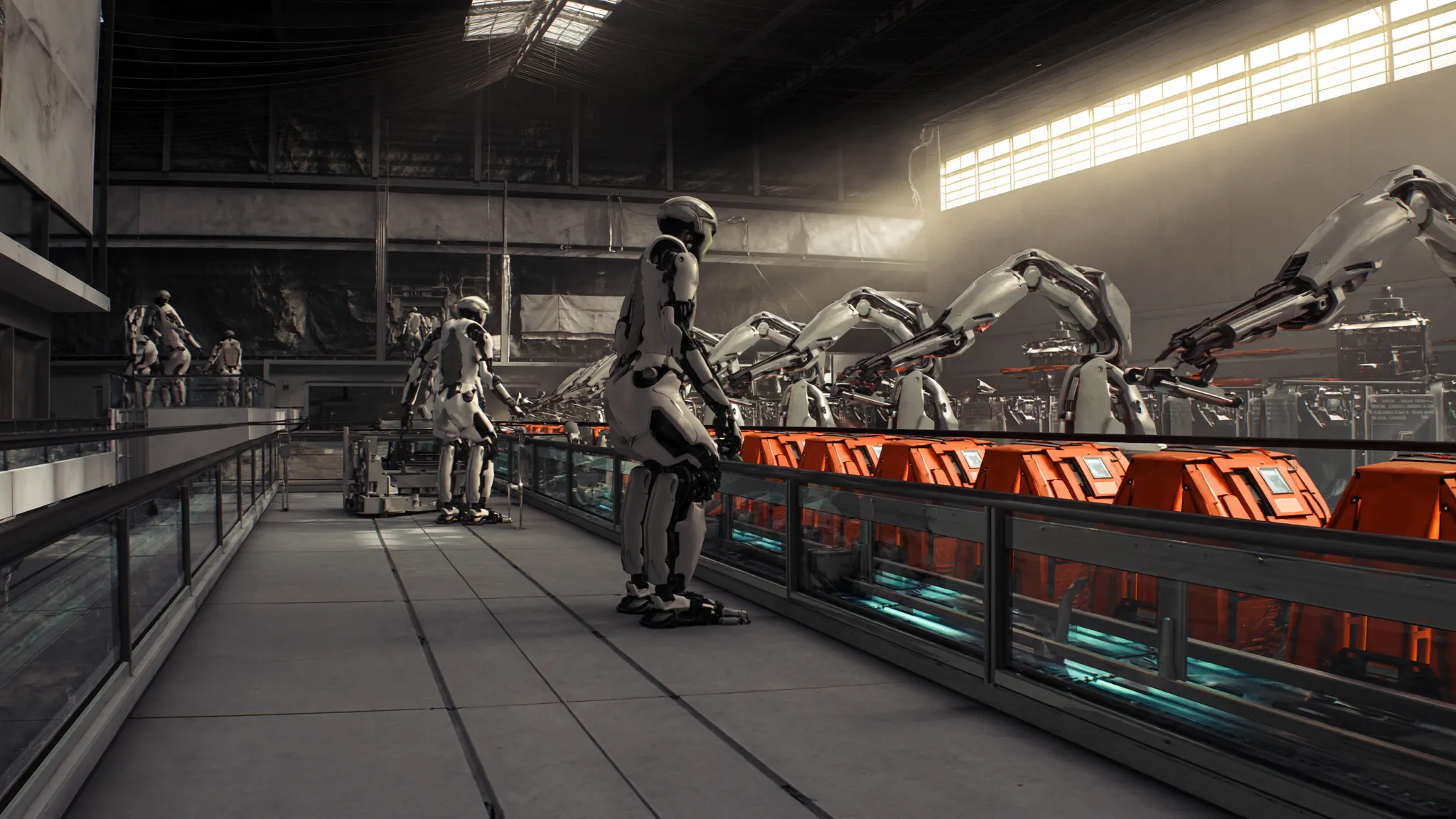
The fundamental design philosophy of cobots underpins this rapid growth. While traditional industrial robots are isolated by safety fences and specialized in high-speed, high-precision tasks, cobots are designed to safely collaborate with humans in the same workspace. Since the UR5 model, the world’s first commercial cobot launched by Universal Robots, headquartered in Odense, Denmark, in 2008, cobot technology has rapidly advanced. Current cobots comply with ISO 10218 and ISO/TS 15066 safety standards and feature safety functions that allow them to stop immediately with a force of less than 80 watts upon collision, enabling close human interaction without the need for safety fences. This safety, combined with installation costs 40-60% lower than traditional industrial robots and intuitive drag-and-drop programming that allows operation without professional engineers, has sparked explosive interest among small and medium-sized enterprises.
Examining the competitive landscape of the global cobot market, Universal Robots maintains a dominant first place with a 45% market share, although competitors are rapidly growing. ABB, headquartered in Zurich, Switzerland, launched the GoFa and SWIFTI cobot lineups in 2019, raising its market share to 18%. KUKA, based in Augsburg, Germany, ranks third with a 12% share with its LBR iiwa series. Japanese companies are also actively pursuing growth, with FANUC, headquartered in Yamanashi Prefecture, securing an 8% share with its CRX series, and Yaskawa Electric in Fukuoka achieving a 6% market share with its HC series. Notably, Korean companies are making significant strides, with Hyundai Robotics, headquartered in Ansan, rapidly growing in the Asian market with its self-developed Hi5 cobot, and Robostar in Daegu achieving a 15% market share in the domestic market with cobots specialized for small and medium-sized enterprises.
The technological evolution of cobots is entering a new dimension in 2025 through AI integration. While traditional cobots performed only pre-programmed tasks, they now combine computer vision and machine learning to enable real-time environmental awareness and adaptive tasks. Universal Robots’ latest UR20 model is equipped with NVIDIA’s Jetson Orin AI computing platform, capable of 275 trillion AI computations per second, and can recognize the shape and position of workpieces in real-time, increasing pick-and-place accuracy to 99.8%. ABB’s GoFa 15 model, with its proprietary vision system and tactile sensors, can perform assembly tasks with 0.02mm precision and make real-time adjustments for variables during operations. With these enhanced AI capabilities, the application range of cobots is expanding beyond simple repetitive tasks to quality inspection, precision assembly, and even creative work areas.
The tangible effects of cobot adoption in manufacturing are clearly demonstrated through specific cases. German automotive parts manufacturer ZF Friedrichshafen in Munich announced a 35% increase in productivity and a 42% reduction in defect rates after introducing 20 KUKA LBR iiwa cobots to its production line in early 2024. Notably, existing workers transitioned to higher value-added tasks through collaboration with cobots, resulting in a 28% increase in job satisfaction. In Korea, Daehan Shipbuilding Equipment, a small shipbuilding equipment company in Ulsan, implemented welding automation by introducing 12 Hi5 cobots from Hyundai Robotics, reducing work time by 40% and significantly improving welding quality uniformity. Furthermore, pre-work verification through 3D simulation reduced rework rates by 65%. Spirit AeroSystems, an aircraft parts manufacturer in Seattle, USA, reported an annual cost-saving effect of $8.5 million through riveting automation using 50 Universal Robots UR16e models.
Another key factor accelerating the growth of the cobot market is the spread of the Robots as a Service (RaaS) business model. Previously, the initial investment cost for cobot adoption ranged from $50,000 to $150,000 per unit, posing a significant burden for small and medium-sized enterprises. However, the RaaS model allows cobots to be used for a subscription fee of $2,000 to $4,000 per month. RaaS-specialized companies like Formant in San Jose, California, and Franka Emika in Munich, Germany, are rapidly growing, and existing cobot manufacturers are actively adopting this model. ABB launched its RaaS service through the ABB Ability platform in early 2025, with over 1,200 customers worldwide currently using it. The core of this model is providing comprehensive services beyond simple equipment rental, including remote monitoring, predictive maintenance, performance optimization, and software updates. The ability to manage cobots across multiple locations through a cloud-based platform is attracting significant interest from multinational corporations.
Industry-Specific Applications and Technological Innovation
By 2025, the application fields of cobots are rapidly expanding beyond traditional manufacturing to service industries, healthcare, and agriculture. In the automotive industry, precision screw fastening and quality inspection tasks on final assembly lines have become major application areas for cobots. Hyundai Motor Company introduced 200 Hi5 cobots from Hyundai Robotics at its Ulsan plant to automate door assembly and interior installation processes, improving assembly accuracy to 99.5%. In the electronics industry, cobots are used for ultra-precision tasks in smartphone and semiconductor assembly, with Samsung Electronics’ Suwon plant employing ABB GoFa cobots for Galaxy series camera module assembly, performing 0.01mm precision assembly tasks 24/7 without interruption. In the food industry, cobot adoption for packaging and palletizing tasks is accelerating, with Nestlé deploying 300 Universal Robots UR10e models in 50 factories worldwide to implement product packaging automation.
The use of cobots in the medical field is showing particularly notable growth. The UR3e model, developed by Universal Robots in Odense, Denmark, and specialized for medical applications, handles surgical tool delivery and specimen processing in operating rooms, with the cobot system being piloted at the Mayo Clinic in the United States, reducing surgery preparation time by 30%. In Korea, Seoul Asan Medical Center has introduced collaborative robots in its robotic surgery center to establish a patient positioning and surgical tool automatic supply system before surgery. In agriculture, cobot utilization is also expanding, with a tomato farm in Venlo, Netherlands, using a harvest-specific cobot to pick 300 tomatoes per hour, helping to solve labor shortages. In a strawberry farm in Kyoto, Japan, Yaskawa Electric’s HC10 cobot performs strawberry sorting and packaging tasks, improving work efficiency by 45%.
One of the key innovations in cobot technology is the advancement of intuitive programming and user interfaces. While past industrial robot programming required specialized coding knowledge, current cobots can be programmed with simple touchscreen operations like a smartphone. Universal Robots’ PolyScope software allows robot motion programming through a drag-and-drop method, enabling basic operation by general workers with just two hours of training. ABB’s Wizard Easy Programming is provided in the form of a smartphone app, allowing immediate programming modifications on-site and featuring augmented reality (AR) capabilities to simulate robot movements in 3D. KUKA’s iiQKA platform offers the ability to operate robots with natural language commands, allowing robots to be instructed with everyday language, such as “Pick up the red part and put it in the box.”
Advancements in sensor technology have also significantly contributed to enhancing cobot performance. The latest cobots integrate various sensors, including 6-axis force/torque sensors, 3D vision sensors, tactile sensors, and proximity sensors, enabling delicate tasks at a human level. The BioTac tactile sensor developed by SynTouch, a startup in Berlin, Germany, mimics the tactile sensation of a human fingertip, detecting forces as subtle as 0.01N, allowing cobots equipped with it to perform delicate tasks like picking up eggs without breaking them or separating sheets of paper. In the field of computer vision, NVIDIA’s Omniverse platform-integrated AI vision system maps the work environment in 3D in real-time and recognizes the shape and material of workpieces to automatically calculate the optimal grip points. With these sensor fusion technologies, cobots can autonomously perform complex assembly, inspection, and packaging tasks beyond simple repetitive tasks.
Regional growth patterns in the global cobot market reveal interesting differences. The North American market maintains the largest scale, accounting for 35% of the total cobot market, but in terms of growth rate, the Asia-Pacific region leads with an average annual growth rate of 32%. China is actively supporting cobot adoption as part of its “Made in China 2025” manufacturing advancement policy, with annual cobot installations reaching 25,000 units by 2025, ranking first in the world. Korea is promoting cobot automation in semiconductor manufacturing processes in connection with the K-Semiconductor Belt Project, and the government is conducting the “Smart Factory Expansion Project” to support cobot adoption in 10,000 small and medium-sized enterprises by 2027. Japan is expanding cobot adoption in service industries and healthcare as part of its response to an aging society, particularly leading the world in the nursing care robot sector.
Market Outlook and Investment Opportunities
The future outlook for the cobot market is very positive, with several global investment institutions focusing on this field. Goldman Sachs, in its December 2025 report, projected that the cobot market would grow at a CAGR of 26.9% to reach $62 billion by 2030. The integration with AI technology is expected to accelerate market growth as cobot applications expand beyond manufacturing to service industries, healthcare, agriculture, and construction. McKinsey & Company analyzed that the cumulative number of cobot installations worldwide would exceed 4 million units by 2030, with 60% concentrated in the Asia region. The productivity improvement effect from work automation is estimated to reach $2 trillion annually, equivalent to 2.1% of global GDP.
Venture capital and private equity investments in the cobot sector are also surging. In the first half of 2025 alone, investments in cobot-related startups reached $3.4 billion, a 180% increase compared to the same period last year. Startups with AI-based cobot technology are attracting significant interest from investors, with Covariant in Berkeley, California, raising $80 million in a Series C round, and Boston Dynamics AI in Cambridge, Massachusetts, securing $150 million in a Series B round. In Korea, a robot-specialized investment fund jointly established by Naver and Hyundai Motor Company has been set up with a scale of 50 billion won to discover cobot startups. China’s Tencent and Alibaba are also operating dedicated robot funds of $1 billion each, actively investing in next-generation cobot technology.
From a supply chain perspective, the cobot industry is facing the critical task of securing a stable supply of key components such as semiconductors, sensors, motors, and reducers. High-performance servo motors and precision reducers are particularly monopolized by Japanese and German companies, making supply chain diversification urgent. Japan’s Harmonic Drive holds 65% of the global market for cobot reducers, and Germany’s Maxon Motor maintains a dominant position in the precision servo motor sector. In response, Korea’s Hyundai Wia and LS Cable & System are working on localizing key components for cobots, while China is promoting self-sufficiency in cobot components under government leadership. Taiwan’s TSMC and Intel in the United States are focusing on developing AI chips for cobots, with intense competition in developing low-power, high-performance chips optimized for edge AI processing.
Along with the growth of the cobot market, risk factors also need to be carefully considered. First, the rapid technological advancement is shortening product life cycles. The current average technological life cycle of cobots is 3-4 years, significantly shorter than the 7-10 years of traditional industrial robots. While this shortens the investment recovery period for companies, it also increases the burden of continuous upgrade costs. Second, the risk of cybersecurity is increasing. As cobots become network-connected, enabling remote monitoring and control, they are more exposed to hacking and malware attacks. In the first half of 2025 alone, over 150 cases of cobot-related cyberattacks were reported worldwide, with 30% resulting in manufacturing line disruptions. Third, there is a shortage of skilled technicians. While cobot adoption has become easier, advanced utilization still requires specialized personnel, with a global shortage of approximately 150,000 cobot experts.
The key trends in future cobot technology development can be summarized as full autonomy and swarm collaboration. While current cobots focus on collaboration with humans, next-generation cobots will implement swarm intelligence, where multiple cobots communicate with each other to share complex tasks. Google’s DeepMind is developing the RT-X project, aiming to implement collective intelligence by sharing learning data from cobots worldwide through a cloud-based system. Additionally, the combination with digital twin technology is entering the commercialization stage, allowing cobot operations to be pre-simulated and optimized in virtual environments. Siemens’ NX platform and Dassault Systèmes’ 3DEXPERIENCE have already partnered with major cobot manufacturers to provide digital twin-based cobot operation solutions. These technological advancements are expected to evolve cobots from simple automation tools to intelligent production partners, fundamentally changing the paradigm of manufacturing.
