The Revolution in Robot Learning and Manipulation Technology: The Dawn of the Next-Generation Intelligent Robot Era in 2026
 Editor
As we enter 2026, the robotics industry is experiencing an unprecedented wave of innovation in the fields of learning and manipulation technology. Moving away from traditional programming-based robots, intelligent robots capable of real-time learning and adaptation are emerging as key players in industrial sites, driving structural changes in the entire manufacturing ecosystem beyond mere technological progress. The global market for robot learning and AI-based manipulation is projected to expand from $18.7 billion in 2025 to $54.2 billion by 2030, with an average annual growth rate of 28.4%. In particular, South Korea, in alignment with the government’s ‘K-Robot 2030’ policy, is securing the world’s third-largest technological capability in the field of robot learning technology, standing out in global competition.
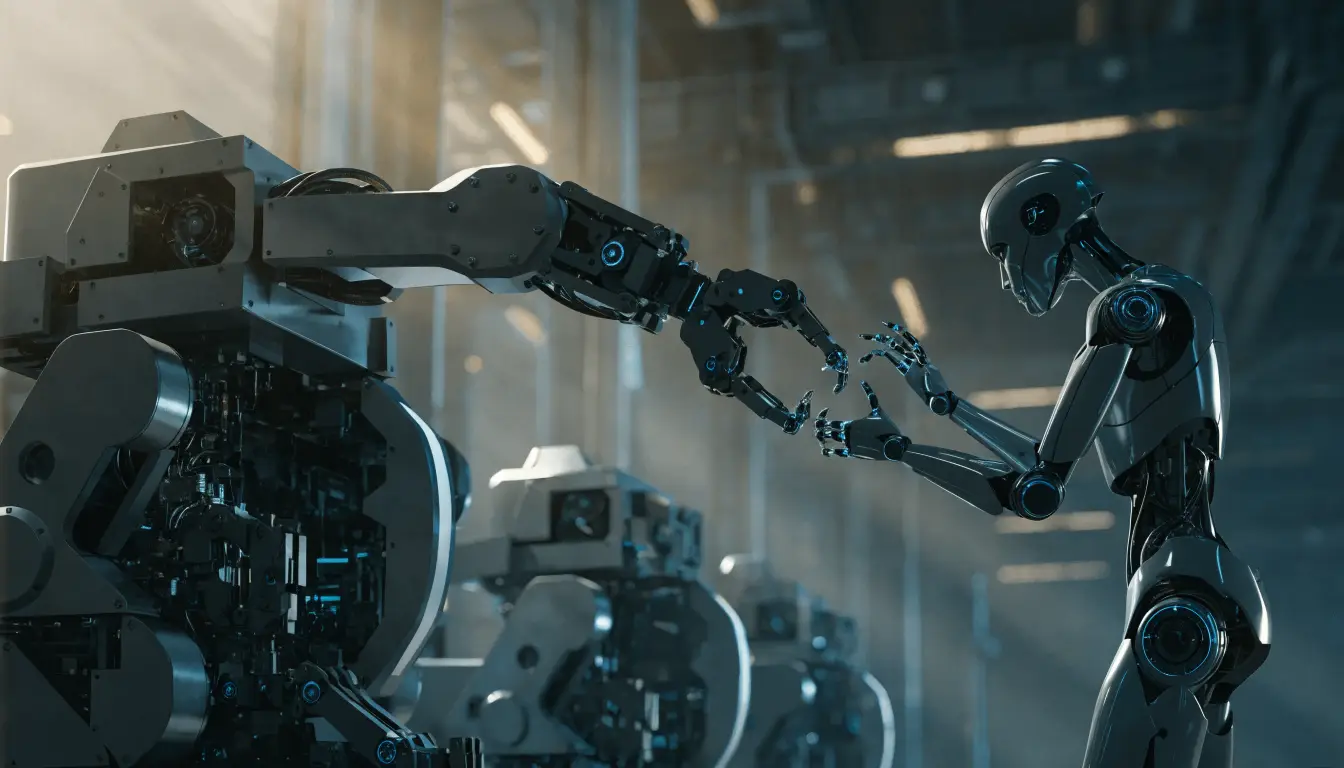
At the core of these changes is the rapid advancement of machine learning and computer vision technologies. Transformer-based robot learning models, which began commercialization in earnest in the latter half of 2025, have improved learning efficiency by an average of 340% compared to existing reinforcement learning methods and have achieved remarkable results by reducing adaptation time for new tasks from 72 hours to 4.2 hours. The technological innovations led by California-based OpenAI’s robot learning platform and Google’s DeepMind RT-X project have equipped robots with the ability to assess situations and adapt to new environments on their own, beyond merely performing predefined tasks. This signifies a fundamental paradigm shift in the robotics industry, indicating that software and AI algorithms are emerging as key differentiators in the competition landscape previously dominated by hardware.
Industrial Expansion of Next-Generation Robot Learning Technology
The most notable area in current robot learning technology is the hybrid approach combining imitation learning and reinforcement learning. South Korea’s Hyundai Robotics commercialized technology that analyzes and imitates worker movements in real-time through the ‘H-Bot Learning Platform’ launched in November 2025, achieving a 65% reduction in welding robot learning time at Hyundai Motor’s Ulsan plant compared to previous methods. This system allows robots to perform complex curved welding tasks based on just 30 minutes of demonstration by a worker, reducing setup time by over 90% compared to traditional programming methods. Hyundai Robotics’ innovation has directly impacted the company’s stock price, which rose by 47% since the latter half of 2025, reflecting high market expectations.
Germany’s KUKA is demonstrating a differentiated approach in the field of robot learning with its ‘iiQKA.OS 3.0’ platform announced in September 2025. This platform adopts a method of sharing and learning work data collected by KUKA robots worldwide through a cloud-based distributed learning system. Currently, over 12,000 KUKA robots in 47 countries are connected to this network, and it is regarded as a pioneering example of applying the concept of swarm intelligence to robot learning. In a pilot test conducted at BMW’s Munich plant, the time to set up a new car model assembly line was reduced from six weeks to 1.5 weeks, and the overall system efficiency was maximized by sharing learning experiences among robots.
Japan’s FANUC is taking a unique approach in the field of robot learning. Through the ‘FIELD system 3.0’ launched in August 2025, the company has implemented a real-time learning system combining IoT and edge computing technology. The core of this system is the robot’s ability to detect environmental changes while performing tasks and optimize its actions in real-time. In tests conducted at Toyota’s Tokyo plant, the accuracy of parts assembly improved from 99.7% to 99.94%, and the defect rate decreased by 67%. FANUC’s technological innovation resulted in a 23% increase in the company’s fourth-quarter sales in 2025 compared to the same period the previous year, significantly contributing to the expansion of its market share in Asia.
Innovation in Precision Manipulation Technology and Market Impact
The most innovative advancement in robot manipulation capabilities is the integration of tactile sensing and force control technology. Switzerland’s ABB implemented human-level tactile sensitivity in its ‘YuMi 3.0’ collaborative robot announced in October 2025. This robot can detect subtle force changes as small as 0.01N (newtons), enabling precise tasks such as lifting an egg without breaking it or accurately picking up a sheet of paper. ABB’s technological innovation is particularly noteworthy in the electronics assembly sector, and the application of YuMi 3.0 in Rolex’s Swiss factory improved assembly accuracy from 99.2% to 99.8% compared to human labor. Fueled by these achievements, ABB’s robotics division sales increased by 19% year-over-year to $3.4 billion in 2025.
South Korea’s Doosan Robotics is showcasing unique manipulation technology in the collaborative robot sector. The ‘M-Series’ robots launched in July 2025 implement a manipulation system that comprehensively utilizes visual, tactile, and auditory information through multi-sensor fusion technology. Notably, the robots can analyze sounds generated during tasks to assess the state of part assembly or tool wear. In tests conducted at LG Electronics’ Changwon plant, the accuracy of detecting defective parts in the appliance assembly process reached 94.3%, reducing post-process defect rates by 72%. Doosan Robotics’ innovative technology is recognized in the global market, with overseas sales accounting for 43% of total sales in 2025, a 67% increase from the previous year.
America’s Tesla is presenting new possibilities in robot manipulation technology with its humanoid robot ‘Optimus Gen-3.’ Unveiled in December 2025, this robot utilizes computer vision and AI technology accumulated from autonomous driving to implement human-like wrist and finger movements. Notably, the robot can analyze the weight, material, and shape of objects in real-time to select the optimal grip method. In internal tests conducted at Tesla’s Gigafactory, Optimus performed battery cell assembly tasks at nearly the same speed and accuracy as human workers, with the advantage of operating continuously for 24 hours. Tesla plans to start commercial sales of Optimus in 2026, offering a competitive initial price of $20,000 compared to existing industrial robots.
The key element supporting the advancement of robot learning and manipulation technology is the progress in AI semiconductor technology. America’s NVIDIA is leading the edge AI market for robots with its ‘Jetson Orin Nano Super’ chipset launched in September 2025. This chipset provides 3.2 times the computational performance of its predecessors while reducing power consumption by 40%, enabling robots to perform complex AI inference in real-time. Currently, 85% of major robot manufacturers worldwide have adopted NVIDIA’s chipset, resulting in NVIDIA’s robot-related sales reaching $4.7 billion in 2025, a 156% increase from the previous year. The demand growth in robot manufacturing powerhouses such as South Korea, Japan, and Germany is particularly notable, positioning NVIDIA as a new growth driver following its data center business.
Alongside the advancement of robot learning technology, simulation-based learning is gaining attention. Learning in real environments is time-consuming, costly, and poses safety risks, making ‘Sim-to-Real’ technology, which trains robots in virtual environments before transferring them to real environments, a key focus. The simulation platform developed by the UK’s DeepMind has increased the accuracy of the physics engine to 99.7%, allowing the learning outcomes in virtual environments to be almost perfectly applied to real environments. Robots utilizing this technology can complete thousands of hours of learning in virtual environments in just a few hours, proving particularly useful in hazardous tasks or those involving expensive equipment. Major German automakers such as BMW and Volkswagen are already using this technology to reduce robot training time for new production lines by an average of 78%.
The advancement of robot learning and manipulation technology is also providing new opportunities for small and medium-sized enterprises. Previously, advanced robot technology was accessible only to large corporations, but the emergence of cloud-based services and low-cost hardware is democratizing access. South Korea’s startup Neuromeka is leading this trend with its ‘Indy-RP2’ collaborative robot launched in April 2025. Despite its affordable price of $15,000, this robot is equipped with advanced learning algorithms, designed for easy adoption by small and medium-sized manufacturers. Currently, over 200 SMEs in South Korea have adopted this robot, reporting an average productivity increase of 34% and a defect rate reduction of 56%. Neuromeka’s success is regarded as a representative example of the popularization of robot technology.
As competition intensifies in the global robot learning market, companies are pursuing differentiated strategies. Japan’s SoftBank is presenting a new paradigm by combining conversational AI and robot control through its ‘Robotics AI Research Institute’ established in May 2025. The technology developed at this institute equips robots with the ability to understand natural language commands and autonomously plan task sequences. In tests conducted at a logistics center in Tokyo, a robot automatically identified red boxes and planned the optimal route to move them when a worker said, “Move the red boxes to area A.” This intuitive interface allows general workers to easily utilize robots without separate training, significantly lowering the barriers to robot adoption.
The advancement of robot learning and manipulation technology is also promoting the emergence of new business models. The ‘RaaS (Robot as a Service)’ model is a representative example, where companies use robots as a service for a specified period instead of purchasing them. Denmark’s Universal Robots started offering such services through its ‘UR+ Cloud’ platform in March 2025, providing the latest collaborative robots, continuous software updates, and remote support services for a subscription fee of $2,500 per month. Currently, over 350 companies in Europe are using this service, with high responsiveness from food processing companies with significant seasonal demand fluctuations. Universal Robots’ RaaS revenue accounted for 23% of total sales in 2025, accelerating the shift from a hardware-centric revenue structure to a service-oriented one.
One of the critical issues arising with the advancement of robot learning technology is data security and intellectual property protection. The work data collected during the robot learning process includes core manufacturing know-how and quality control methods of companies, making it essential to protect this information securely. Germany’s Siemens addressed these concerns by launching the ‘Secure Robot Learning Platform’ in June 2025. This platform uses blockchain technology to encrypt robot learning data and implements federated learning to achieve collective intelligence without exposing original data externally. Major German automakers such as Audi and Mercedes-Benz have already adopted this platform, which is regarded as a model case for securing corporate confidentiality and robot learning efficiency simultaneously.
As of 2026, the robot learning and manipulation technology market stands at a turning point. With the technological maturity reaching a critical point, laboratory-level technology is rapidly spreading to actual industrial sites, leading to expanded application areas not only in manufacturing but also in services, healthcare, agriculture, and more. Particularly in South Korea, the government’s active policy support and bold investments by large corporations present a golden opportunity to secure global leadership in this field. The technological innovations and global market entry achievements of domestic companies such as Hyundai Robotics and Doosan Robotics provide a solid foundation for South Korea to emerge as a robotics powerhouse, and securing competitiveness in this field over the next five years is expected to be a key element of national manufacturing competitiveness.
Looking ahead, robot learning and manipulation technology is expected to become more sophisticated and versatile. If experts’ predictions that robots will acquire human-level dexterity and judgment by 2030 come true, it will bring about fundamental changes in the current industrial structure and labor market. To prepare for these changes, companies must actively invest in technology, workforce retraining, and the development of new business models. To secure a competitive edge in the new work environment where robots and humans collaborate, it is necessary to go beyond merely adopting robots and innovate the entire production system and organizational culture, thereby achieving true digital transformation.
