The Turning Point of the Robotics Industry in 2025: How Humanoid Robots are Redefining Manufacturing
 Editor
As of late 2025, the global humanoid robot market is penetrating manufacturing sites faster than anticipated. According to the latest report from market research firm IDTechEx, the global market size for humanoid robots increased by 50%, from $1.8 billion in 2024 to $2.7 billion in 2025, and is projected to reach $15.4 billion by 2030 with an average annual growth rate of 35%. The rapid growth is driven by the significant advancements in artificial intelligence technology and the labor shortages faced by manufacturers.
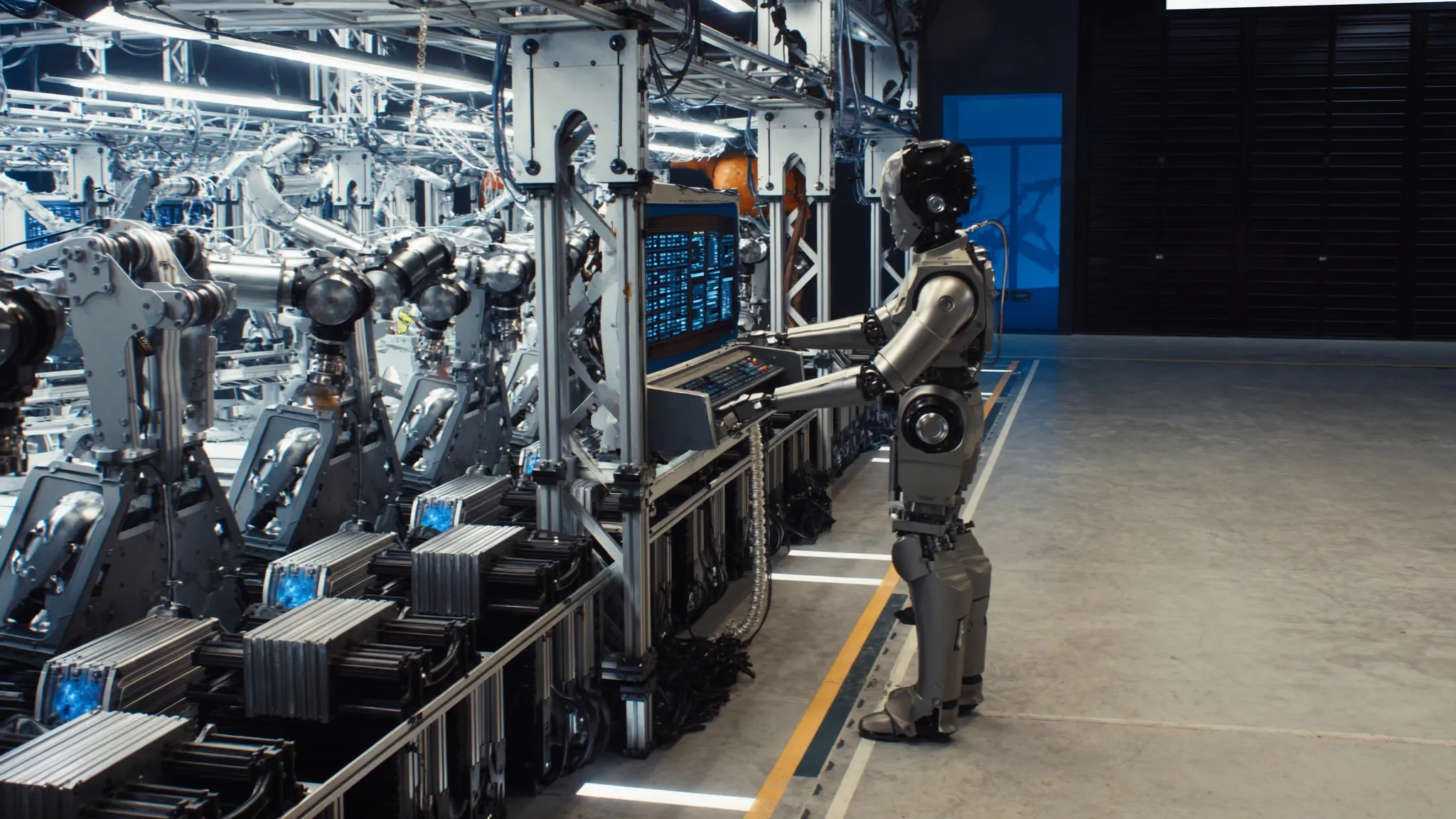
Notably, the core value that differentiates humanoid robots from traditional industrial robots is becoming clearer. While traditional industrial robots are specialized for specific tasks, humanoid robots can perform a variety of tasks in human-designed work environments without requiring changes to the infrastructure. This offers manufacturers the opportunity to significantly reduce capital investment costs while enhancing production flexibility. McKinsey’s 2025 Manufacturing Automation Report analyzes that the introduction of humanoid robots has lowered the automation entry barriers for small and medium-sized manufacturers by an average of 40%.
Based in California, USA, Tesla is leading the industry by initiating the pilot operation of its Optimus humanoid robot at its Gigafactory starting in the first half of 2025. Tesla’s Optimus is a human-shaped robot standing 173 cm tall and weighing 57 kg, capable of lifting objects up to 20 kg and moving at a speed of 8 km/h. CEO Elon Musk announced during the third-quarter earnings call in 2025 that “Optimus demonstrated 15% higher accuracy than human workers in the battery pack assembly process and can operate continuously for 24 hours, tripling productivity.” Tesla plans to reduce the production cost of Optimus to below $20,000 by 2026 and commence external sales.
Intensifying Competition in the Asian Humanoid Robot Market
Honda, based in Tokyo, Japan, announced its re-entry into the manufacturing market by unveiling the next-generation humanoid robot ‘ASIMO-X’ in October 2025. ASIMO-X boasts a 300% improvement in balance compared to the previous ASIMO and has the finger precision required for complex assembly tasks. Honda, along with Panasonic and Toyota, is participating in the Japanese government’s ‘Robot New Industry Creation Program,’ with plans to invest a total of 5 billion yen by 2026. Notably, Honda’s ASIMO-X is specialized in building ‘hybrid production lines’ that collaborate with human workers in automotive parts assembly processes.
In South Korea, Seoul-based Hyundai Motor Company unveiled the prototype of its humanoid robot ‘H-Bot’ in August 2025. Developed based on technology from Hyundai’s robotics subsidiary Boston Dynamics, H-Bot can be deployed across all automotive manufacturing processes, including welding, painting, and assembly. Hyundai plans to pilot 10 H-Bots at its Ulsan plant in 2025 and aims to introduce humanoid robots to 30% of its entire production line by 2027. A Hyundai official explained, “The introduction of H-Bot has greatly enhanced the flexibility of the production line, reducing the cost of changing production equipment by 70% when switching to new car models.”
Samsung Electronics, based in Suwon, is also accelerating the development of humanoid robots specialized for semiconductor manufacturing processes. In September 2025, Samsung began testing the ‘Samsung Bot-S,’ optimized for cleanroom environments, at its DS division’s Hwaseong campus. This robot performs various tasks, from semiconductor wafer handling to equipment inspection, maintaining the sterile environment of the cleanroom while enabling precise operations. Samsung plans to introduce 100 Samsung Bot-S units by 2026, increasing the automation rate of its semiconductor production process from the current 75% to 90%.
Pangyo-based Doosan Robotics, a domestic robotics specialist, has entered the humanoid robot market, leveraging its expertise in the collaborative robot (cobot) field. The ‘DR-H1’ humanoid robot from Doosan Robotics features the safety and precision of existing collaborative robots integrated into a human-shaped robot. This robot is optimized for small-batch, high-variety production environments of small and medium-sized manufacturers and facilitates easy collaboration with workers. Doosan Robotics reported a revenue of 184.7 billion won in 2025, a 23% increase from the previous year, with the humanoid robot business accounting for 15% of total sales.
Technological Innovation and Market Competitiveness
The key technologies accelerating the adoption of humanoid robots in manufacturing are AI-based learning capabilities and advancements in sensor technology. NVIDIA’s Isaac platform, based in California, USA, serves as a critical infrastructure supporting the motion learning and simulation of humanoid robots. NVIDIA CEO Jensen Huang announced at the 2025 GTC Conference that “the learning speed of humanoid robots using the Isaac platform has increased tenfold compared to before, and complex assembly tasks can be learned in an average of two weeks.” Currently, 85% of major humanoid robot manufacturers worldwide use NVIDIA’s AI chips and software.
In terms of sensor technology, the integration of multimodal sensor systems combining vision, touch, and balance is key. Infineon Technologies, based in Munich, Germany, extensively uses its 3D ToF (Time-of-Flight) sensors and IMU (Inertial Measurement Unit) for spatial awareness and balance control in humanoid robots. Infineon’s REAL3 ToF sensor, in particular, can recognize objects with a precision of less than 1 mm, achieving human-level performance in precise assembly tasks. According to market research firm Yano Research, the sensor market for humanoid robots grew by 45% year-on-year to $1.2 billion in 2025.
Battery technology is also a crucial factor determining the practicality of humanoid robots. South Korea’s LG Energy Solution and China’s CATL are competing to develop high-density batteries specifically for humanoid robots. In November 2025, LG Energy Solution announced a next-generation lithium-ion battery with an energy density of 400 Wh/kg, doubling the continuous operation time of humanoid robots from 4 hours to 8 hours. CATL has also developed a similar performance ‘Qilin 2.0’ battery, supplying it to major robot manufacturers like Tesla and BYD.
However, significant technical and economic challenges remain in the adoption of humanoid robots in manufacturing. The most significant issue is the high initial adoption cost. The average price of commercially available humanoid robots is $150,000-$500,000, which is 3-5 times more expensive than traditional industrial robots. Additionally, safety and reliability in complex work environments have not been fully verified. According to a 2025 survey by the Japan Robot Association, 68% of manufacturers are considering adopting humanoid robots, but the actual adoption rate is only 12%. The main barriers identified are high costs (45%), safety concerns (32%), and technical limitations (23%).
To address these challenges, robot manufacturers are actively adopting the RaaS (Robot-as-a-Service) model. ABB, based in Zurich, Switzerland, began offering humanoid robots as a subscription service starting in the second half of 2025. ABB’s ‘YuMi Pro’ humanoid robot is available for a monthly subscription fee of $5,000, which includes maintenance and software updates. ABB expects this model to significantly lower the adoption threshold for small and medium-sized manufacturers.
The global competition in the humanoid robot market is characterized by a technological supremacy race among major countries such as the USA, Japan, South Korea, and China. The USA, led by Tesla and Boston Dynamics, is ahead in AI and hardware integration technology, while Japan, with Honda and SoftBank Robotics, excels in precision control and safety. South Korea, with Hyundai and Samsung Electronics, focuses on developing manufacturing-specific solutions, while China aims to expand its market share based on its cost-effective mass production capabilities. China’s UBTECH Robotics completed the world’s largest humanoid robot production facility with an annual capacity of 10,000 units by the end of 2025.
The most notable change in the humanoid robot market in 2025 is that manufacturers are beginning to perceive them as tools for production innovation, beyond mere cost reduction. Siemens’ Digital Factory division in Germany introduced the concept of ‘Adaptive Manufacturing’ using humanoid robots. This manufacturing system can reconfigure production lines in real-time according to market demand changes, with the versatility of humanoid robots playing a key role. Siemens analyzed that this system can reduce new product launch times by 40% and inventory costs by 25%.
The future growth drivers of the humanoid robot market lie in the continuous advancement of AI technology and the acceleration of digital transformation in manufacturing. The combination of conversational AI and vision AI, in particular, enables humanoid robots to understand and execute work instructions in natural language, creating an environment where they can be easily utilized without programming expertise. Market experts predict 2026 to be the ‘year of popularization’ for humanoid robots, with over 30% of global manufacturers expected to adopt humanoid robots by 2030. This is anticipated to be a technological turning point that can fundamentally change the paradigm of manufacturing.
