The AI Chip War in the Semiconductor Industry of 2026: A Paradigm Shift from Memory to Logic
 Editor
In early 2026, the global semiconductor industry is at a historic turning point due to the explosive demand for artificial intelligence (AI) chips. According to market research firm Gartner, the AI semiconductor market is expected to grow by 34% from $71 billion in 2025 to $95.3 billion in 2026, significantly outpacing the overall semiconductor market growth rate of 8.2%. As the number of parameters in generative AI models increases exponentially, the existing GPU-centric AI chip ecosystem is expanding to include various architectures such as dedicated AI processors (ASICs) and neuromorphic chips. This shift presents new opportunities and serious challenges for Korean companies with strengths in memory semiconductors.
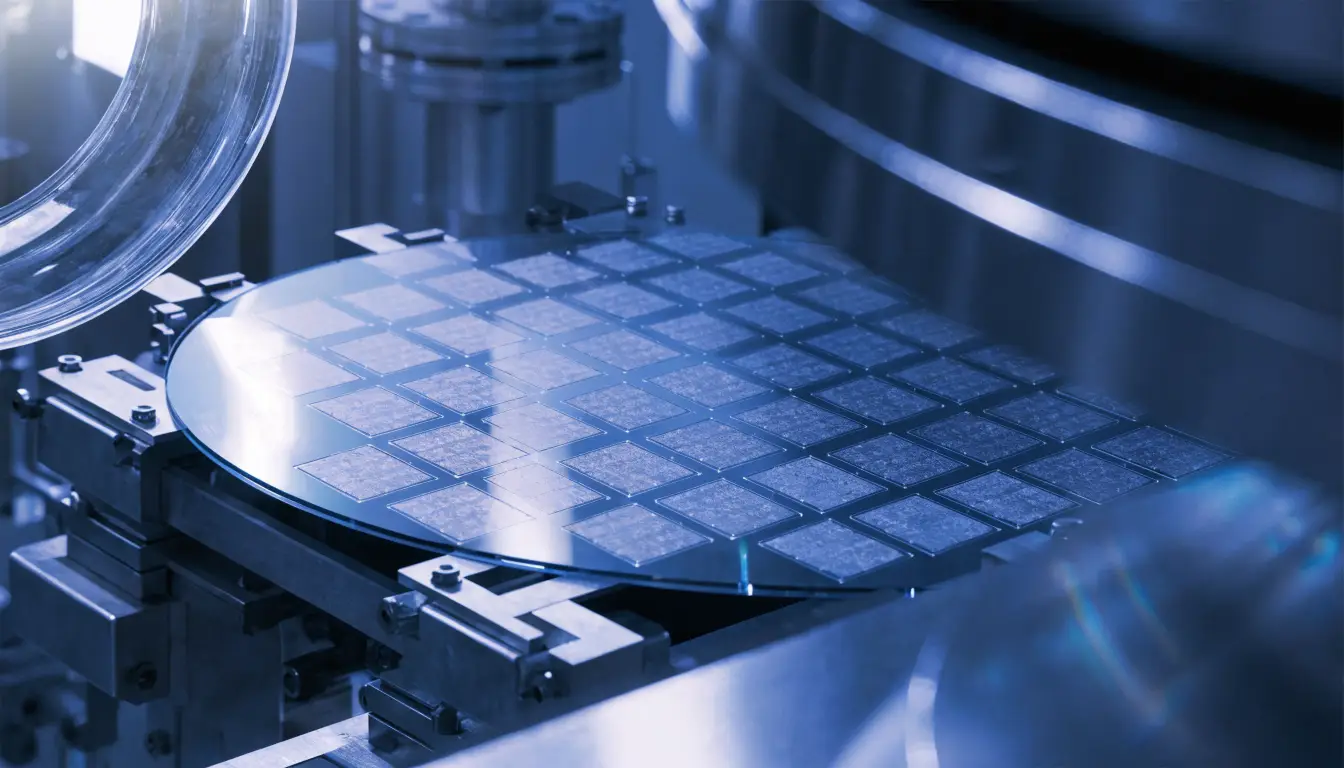
Korea’s memory semiconductor industry, represented by Samsung Electronics and SK Hynix, is experiencing unprecedented prosperity in 2026. The explosive increase in demand for high-bandwidth memory (HBM) required for AI model training and inference is exacerbating the shortage of HBM3E and HBM4 products. SK Hynix announced that its HBM sales in the fourth quarter of 2025 increased by 280% year-on-year to $4.7 billion and expects this growth trend to continue into the first half of 2026. Samsung Electronics is also ramping up mass production of HBM3E, aiming to expand its market share in the AI memory market. Both companies plan to invest a total of 15 trillion won to expand HBM production capacity, suggesting that the AI boom in the memory industry will continue for some time.
## Diversification of AI Chip Architectures and Technological Innovation
The most notable change in the AI semiconductor market is the diversification from a simple GPU-centric structure to various dedicated chip architectures. While California-based NVIDIA dominates the AI training market with its H100, H200, and the latest B200 GPUs, a new competitive landscape is emerging in the inference-only chip market. Google’s TPU (Tensor Processing Unit) v5 shows 2.8 times improved efficiency in AI inference performance compared to NVIDIA’s H100, and Amazon’s Inferentia2 chip secures a competitive edge in cost-performance. The emergence of these dedicated chips allows for optimized hardware selection for specific AI workloads, accelerating the trend of reducing reliance on a single GPU.
In particular, the demand for low-power, high-efficiency chips is surging in the edge AI market. Qualcomm’s Snapdragon X Elite processor leads the PC AI chip market by boosting NPU (Neural Processing Unit) performance to 45 TOPS, while Apple’s M4 chip significantly enhances on-device AI capabilities in MacBooks and iPads with 38 TOPS of AI performance. The edge AI chip market has grown to $28.7 billion by 2026, with an annual growth rate of 28%. The Korean semiconductor industry is also strengthening its system semiconductor capabilities to respond to these changes, but there is still a gap with global leading companies in design technology and software ecosystem development.
Neuromorphic chip technology is also gaining attention as it enters the commercialization phase in 2026. Intel’s Loihi 2 chip and IBM’s TrueNorth-based systems demonstrate power efficiency over 1,000 times that of traditional digital processors, increasing their utility in applications where battery life is crucial, such as the Internet of Things (IoT) and autonomous vehicles. Market research firm IDC predicts that the neuromorphic chip market will grow from $1.2 billion in 2026 to $8.7 billion by 2030. This signifies the emergence of a new computing paradigm that overcomes the limitations of the traditional von Neumann architecture and mimics the functioning of the human brain.
## Global Supply Chain Restructuring and Geopolitical Impact
The rapid growth of the AI semiconductor market is triggering a fundamental restructuring of the global supply chain. Taiwan’s TSMC maintains a dominant position in the AI chip foundry market, producing 92% of the world’s highest-performance AI chips as of the first quarter of 2026. TSMC’s 3nm process is responsible for producing major AI chips such as NVIDIA’s B200, Apple’s M4, and AMD’s MI350X, with 67% of its 2026 revenue coming from AI-related chips. This increased reliance on TSMC heightens geopolitical risks, prompting the US and European governments to invest heavily in securing domestic AI chip production capabilities.
The effects of the US CHIPS Act are becoming evident as the diversification of AI semiconductor production bases progresses. Intel is investing $20 billion to build an AI chip dedicated fab in Ohio, and TSMC is constructing a $40 billion fab in Arizona to produce 3nm AI chips starting in 2027. Samsung Electronics is expanding its foundry business with a $17 billion investment in Taylor, Texas, but closing the technology gap with TSMC in the AI chip market remains a challenge. Samsung’s 3nm GAA (Gate-All-Around) process is improving in yield, but major customers like Qualcomm and NVIDIA are expected to adopt it in earnest after 2027.
China’s AI semiconductor ambitions also represent a notable change. Companies like Baidu, Alibaba, and Huawei are accelerating their own AI chip development, with Huawei’s Ascend 910C showing performance similar to NVIDIA’s A100 and being used for AI model training within China. China’s AI semiconductor market size is $28.4 billion as of 2026, accounting for 29.8% of the global market, with self-sufficiency rising from 23% in 2025 to 31% in 2026. However, reliance on foreign advanced memory and process technology remains high, and US export controls pose significant constraints on the development of China’s AI industry.
## AI-Specialized Evolution of Memory Semiconductors
As the complexity of AI models increases, memory semiconductor technology is also rapidly evolving. Existing DDR5 DRAM struggles to meet the bandwidth requirements of AI workloads, making HBM (High Bandwidth Memory) an essential component of AI systems. Led by SK Hynix, HBM3E offers a bandwidth of 1.15TB/s, and the upcoming HBM4, scheduled for release in the second half of 2026, is expected to boost performance to 2.0TB/s. Memory industry experts project that the HBM market will grow from $30 billion in 2026 to $85 billion by 2030, with an annual growth rate of 29%.
Samsung Electronics is focusing on developing PIM (Processing-in-Memory) technology to catch up in the HBM market. PIM-HBM can perform computations directly within memory, significantly reducing latency caused by data movement. Samsung’s HBM-PIM improves AI inference performance by 2.5 times and power efficiency by 60% compared to existing HBM3. This PIM technology can significantly lower the inference costs of large language models (LLMs), attracting interest from major AI companies like OpenAI, Anthropic, and Google. Industry insiders expect PIM-HBM to become commercially available starting in 2027.
The competition to develop next-generation memory technology is also fierce. CXL (Compute Express Link) memory, the successor to the 3D XPoint technology jointly developed by Intel and Micron, enhances the bandwidth between CPU and memory by tenfold, enabling real-time learning of AI models. Samsung Electronics plans to launch CXL 2.0-based memory modules in the second half of 2026, which are expected to significantly improve resource utilization efficiency through memory pooling in data centers. Market research firm Yole Intelligence forecasts that the CXL memory market will grow from $1.5 billion in 2026 to $12 billion by 2030.
## Packaging and System-Level Innovation
As AI chip performance improves, the importance of packaging technology is also highlighted. Traditional 2D packaging methods have limitations in connecting AI chips and memory, leading to rapid advancements in 2.5D and 3D packaging technologies. TSMC’s CoWoS (Chip-on-Wafer-on-Substrate) packaging is applied to NVIDIA’s H200 and B200 GPUs to maximize the connection bandwidth with HBM. CoWoS packaging demand increased by 85% year-on-year as of 2026, with TSMC establishing additional CoWoS production lines in Taiwan and Japan.
Korean packaging companies are also benefiting from the AI boom. Samsung Electronics’ I-Cube4 packaging technology stacks HBM up to four layers, doubling memory capacity compared to previous levels, and is developing HBM4-applied products in collaboration with SK Hynix. Global packaging companies like ASE Group and Amkor Technology are expanding advanced packaging services for AI chips by establishing new production facilities in Korea and Taiwan. The share of AI-related revenue in the overall packaging market rose significantly to 42% in 2026 from 23% two years prior.
System-level AI-optimized design is also evolving. Liquid cooling systems are becoming the standard for AI data centers, leading to a surge in revenue for cooling solution companies. NVIDIA’s DGX H200 system integrates eight 800W GPUs into a single node through liquid cooling, improving space efficiency by 60% compared to previous standards. Korean cooling companies are also developing technologies to enter the AI data center cooling market, with particular interest in immersion cooling technology.
## Investment Trends and Market Outlook
Venture capital and corporate investments in the AI semiconductor sector are at an all-time high. As of the first quarter of 2026, investments in AI chip startups totaled $12.7 billion, a 73% increase year-on-year. Investments are particularly active in inference-only chips and edge AI chips, with Cerebras Systems pursuing an IPO with a valuation of $4 billion and Groq raising $1.5 billion in a Series D round. In Korea, investments in AI semiconductor startups are also increasing, with the government planning to invest $30 billion in building an AI chip ecosystem through the K-Semiconductor Belt project.
The financial performance of major semiconductor companies also reflects the AI boom. NVIDIA reported a 262% year-on-year increase in revenue to $26 billion for the first quarter of fiscal year 2026 (ending April 2025), with the data center segment accounting for 80%. AMD’s MI300 series AI accelerator revenue surpassed $4.5 billion per quarter, expanding its presence in the AI market. Among Korean companies, SK Hynix achieved a record operating profit margin of 47% in the fourth quarter of 2025 due to a surge in HBM sales. Samsung Electronics’ DS (Device Solutions) division also returned to profitability in 2026, showing a recovery in the memory market.
However, concerns are being raised about the sustainability of the rapid growth in the AI semiconductor market. Some analysts warn that the current demand for AI chips is outpacing the actual utilization of AI applications, potentially leading to a correction phase after 2027. The high inference costs of generative AI models still pose a barrier to widespread commercialization, which could lead to a slowdown in AI chip demand growth in the long term. Morgan Stanley predicts that the AI semiconductor market’s growth rate will normalize from the current 30% range to 15% from 2028, emphasizing the importance of technological differentiation and cost competitiveness during this period.
The AI semiconductor revolution is not just a technological advancement but a paradigm shift in the global semiconductor industry. Korean companies are capturing new opportunities in the AI era based on their strengths in memory semiconductors, but securing competitiveness in system semiconductors and software ecosystems remains a challenge. While the AI chip market is expected to continue growing over the next 2-3 years, only companies that achieve both technological innovation and cost efficiency are likely to lead the market in the long term. Amid ongoing geopolitical risks and pressures for supply chain diversification, national semiconductor self-sufficiency policies are expected to have a significant impact on the industry’s landscape.
This analysis is based on publicly available market data and industry reports, and additional research and expert consultation are recommended when making investment decisions.
