The New Paradigm of the Rapidly Changing Global Tech Industry by the End of 2025: From AI Semiconductors to Autonomous Driving
 Editor
Structural Changes in the AI Semiconductor Market and the Rise of Korean Companies
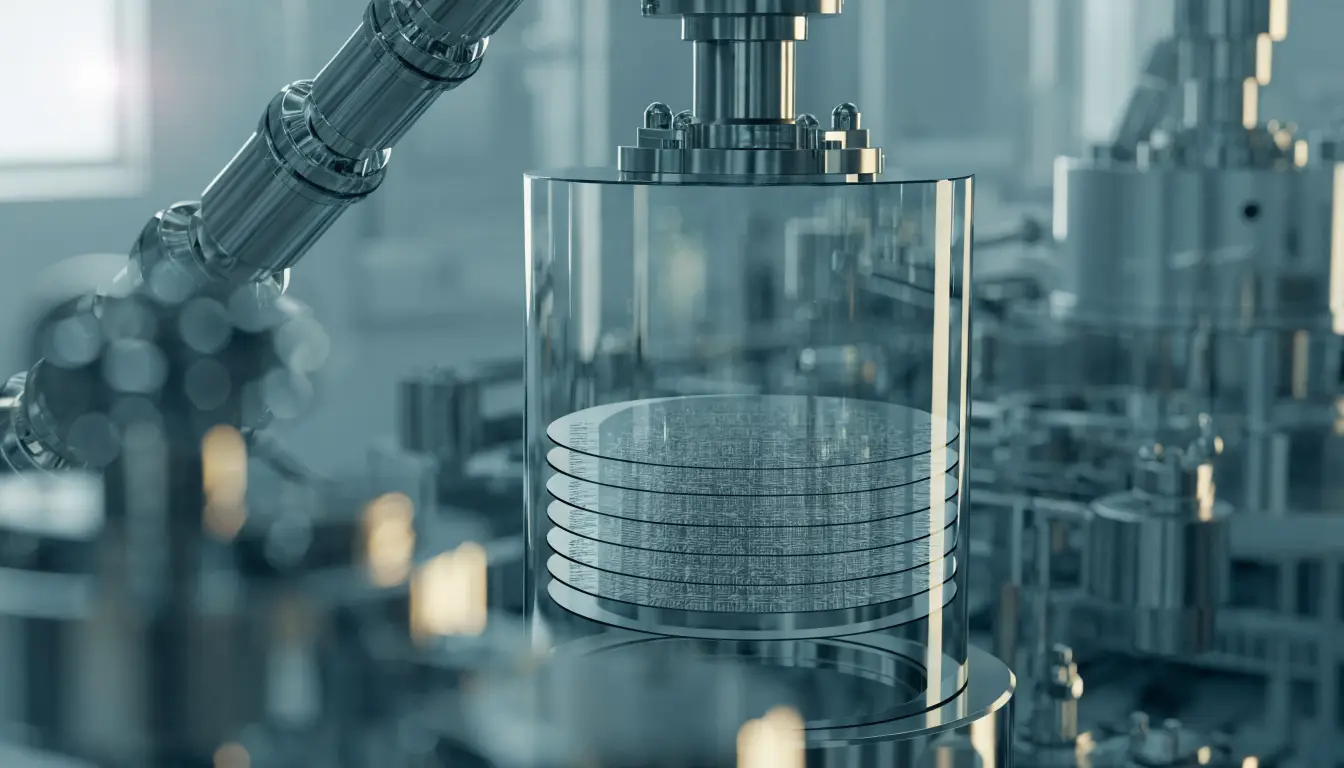
As of December 2025, the global AI semiconductor market has expanded to $280 billion, a 47% increase from the previous year, driving a paradigm shift across the tech industry. Notably, Korean companies are leading this growth, significantly strengthening their position in the global market. Samsung Electronics, headquartered in Hwaseong, Gyeonggi Province, recorded a 53.2% market share in the HBM (High Bandwidth Memory) sector as of the third quarter of 2025, a 12 percentage point increase from the same period last year. This is attributed to the exclusive supply agreement with NVIDIA for its next-generation H200 and B200 GPUs and the surge in demand for AI training memory.
SK Hynix, headquartered in Icheon, Gyeonggi Province, is also emerging as a key beneficiary of this change. The company is expected to achieve a quarterly revenue of 18.7 trillion won in the fourth quarter of 2025, a 340% increase from the previous year, by ramping up mass production of HBM3E. The HBM4 prototype developed by SK Hynix offers 2.1 times the bandwidth of its predecessor and aims for mass production in the first half of 2026, further solidifying its competitive edge in the next-generation AI computing ecosystem. The achievements of these Korean memory semiconductor companies are leading to strengthened strategic partnerships with NVIDIA, headquartered in Santa Clara, California, which procured $34 billion worth of memory semiconductors from Korean companies in 2025.
Meanwhile, in the global foundry market, TSMC, headquartered in Hsinchu, Taiwan, maintains a dominant position. TSMC recorded a 92% market share in the 3-nanometer process in 2025, exclusively producing Apple’s A19 processors and NVIDIA’s next-generation AI chips. However, with Samsung Electronics planning to begin mass production of the 2-nanometer GAA (Gate-All-Around) process in the first half of 2026, changes in the competitive landscape of the foundry market are anticipated. Samsung Electronics has already secured production contracts for next-generation mobile processors from Qualcomm and Google, creating cracks in TSMC’s dominance. ASML’s next-generation EUV equipment, High-NA EUV, headquartered in Veldhoven, Netherlands, is acting as a key variable in this fine process competition, with TSMC, Samsung Electronics, and Intel each having completed the introduction of three units by the end of 2025.
Acceleration of Autonomous Vehicle Commercialization and Intensified Global Competition
The year 2025 is expected to be recorded as the inaugural year when autonomous vehicle technology moves beyond the laboratory into full-scale commercialization. Tesla, headquartered in Austin, Texas, launched Full Self-Driving (FSD) v13 in October 2025, beginning to offer Level 4 autonomous driving functions as a commercial service in major U.S. cities. Tesla’s FSD subscriber count surpassed 2.8 million by the end of 2025, generating $6.6 billion in annual software revenue based on a monthly subscription fee of $199. This accounts for approximately 7% of Tesla’s total revenue, symbolically showcasing the transition from an automobile manufacturer to a software-centric company.
The Korean automotive industry is also actively responding to these changes. Hyundai Motor Company, headquartered in Gangnam-gu, Seoul, opened the era of Level 3 autonomous driving by applying its self-developed autonomous driving platform ‘Highway Driving Pilot 2.0’ to the Genesis GV90 in November 2025. Hyundai’s autonomous driving technology was developed in collaboration with Israel’s Mobileye and enables full autonomous driving at speeds of up to 110 km/h on domestic highways. The company plans to invest an additional 3.2 trillion won in autonomous driving R&D by 2026, aiming for mass production of Level 4 autonomous vehicles by 2027. Hyundai Motor Group holds 2,847 patents related to autonomous driving as of 2025, ranking fourth among global automakers.
In the Chinese market, Baidu, headquartered in Beijing, is leading the commercialization of autonomous driving through its Apollo Go robotaxi service. Baidu’s robotaxis are operating in 10 cities, including Beijing, Shanghai, Guangzhou, and Shenzhen, with daily orders exceeding 70,000 by the end of 2025. Particularly in Wuhan, fully unmanned robotaxi services are operating 24 hours a day, receiving evaluations as reaching the highest level of commercialization globally. Baidu’s autonomous driving technology is based on its self-developed AI chip ‘Kunlun’ and cloud computing infrastructure, with the autonomous driving business unit’s revenue reaching $420 million in the third quarter of 2025, a 73% increase from the same period last year.
The global autonomous vehicle market size is estimated at $124 billion in 2025 and is projected to grow at an average annual rate of 22.3% to reach $336 billion by 2030. The hardware sector is expected to account for 52%, and the software sector 48%, with the proportion of AI-based software rapidly expanding. In the autonomous vehicle sensor market, the price competitiveness of LiDAR technology has significantly improved, with the average unit price dropping 35% from the previous year to $2,400 in 2025. This is analyzed as an important turning point for the popularization of autonomous vehicles.
The Inaugural Year of Quantum Computing Commercialization and the Formation of a New Industry Ecosystem
The year 2025 is being evaluated as the inaugural year when quantum computing moves beyond research and development to begin solving real business problems. IBM, headquartered in Armonk, New York, unveiled the 1,121-qubit quantum computer ‘Flamingo’ in May 2025, starting to offer optimization problems that are difficult to solve with classical computers as a commercial service. The IBM Quantum Network currently includes over 280 companies and research institutions, with quantum computing-related revenue reaching $870 million in the third quarter of 2025, a 190% increase from the same period last year. Particularly in the financial services sector, the use of quantum computing for portfolio optimization and risk analysis is rapidly increasing, with major investment banks like JPMorgan Chase and Goldman Sachs adopting IBM’s quantum computing services.
Alphabet, Google’s parent company based in Mountain View, California, announced the next-generation quantum computer chip ‘Willow’ in December 2025, achieving a groundbreaking advancement in quantum error correction. The Willow chip consists of 105 physical qubits and successfully exponentially reduced the error rate, a core challenge of existing quantum computers. According to Google, Willow demonstrated performance 10^25 times faster than the fastest existing supercomputer in specific benchmark tests. This is being evaluated as a milestone marking the opening of a practical quantum computing era, surpassing quantum supremacy.
In Korea, the government announced the national strategy for quantum computing in 2025, pledging to invest 4.8 trillion won to develop a 1,000-qubit quantum computer by 2035. A research consortium centered around KAIST and KRISS has completed the development of a 20-qubit superconducting quantum computer and plans to expand to a 100-qubit level by 2026. Samsung Electronics is participating in the development of cryogenic semiconductor control chips for quantum computers, and SK Telecom is building a testbed for the commercialization of quantum cryptography communication.
The global quantum computing market size is expected to grow more than fivefold from $1.9 billion in 2025 to $8.4 billion in 2030. The hardware sector is projected to account for 68%, and the software and services sector 32%. Particularly, application fields such as drug development, material design, and financial modeling using quantum computing are rapidly growing, with the pharmaceutical industry expecting to shorten the drug development period from the existing 10-15 years to 5-7 years through quantum computing. Global pharmaceutical companies like Roche, Merck, and Pfizer have already invested billions of dollars in quantum computing-based drug development projects, anticipating a paradigm shift in the healthcare industry.
The economic ripple effects of these technological innovations are expected to be significant. According to the latest report from McKinsey, next-generation technologies such as AI semiconductors, autonomous driving, and quantum computing are expected to create an additional $13 trillion in global GDP by 2030. Particularly, Korea is expected to play a key role in this technological transition based on its existing strengths in the semiconductor and automotive industries, with the government accelerating the cultivation of related ecosystems through the establishment of the K-Semiconductor Belt and autonomous driving specialized complexes. As of the end of 2025, this wave of change is just beginning, and a fundamental restructuring across the tech industry is expected to accelerate over the next five years.