Explosive Growth of the Collaborative Robot Market: A New Paradigm in Manufacturing Automation
 Editor
As of November 2025, the collaborative robot (cobot) market is experiencing unprecedented growth, fundamentally changing the automation paradigm of global manufacturing. According to the latest report by market research firm MarketsandMarkets, the collaborative robot market size is expected to grow from $1.8 billion in 2024 to $12.5 billion by 2030, with an annual growth rate of 37.1%. This significantly surpasses the average growth rate of 12.3% for the entire industrial robot market, indicating that collaborative robots are emerging as a key driver of manufacturing automation beyond a mere niche market.
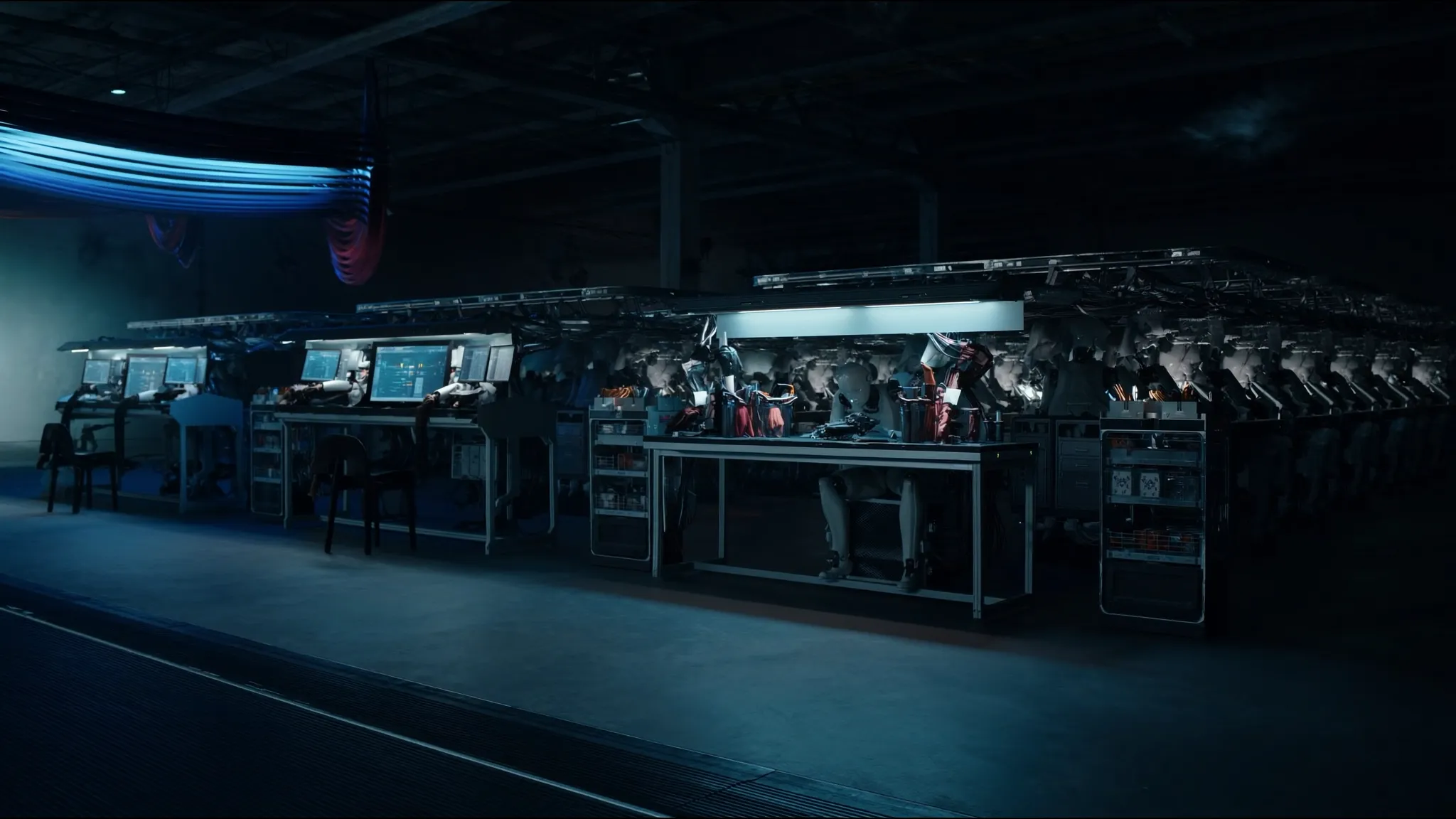
The rapid growth of collaborative robots stems from an entirely different approach compared to traditional industrial robots. While conventional industrial robots performed high-speed, high-precision tasks within safety fences, collaborative robots work directly in the same space as humans. This technology, first commercialized by Universal Robots, headquartered in Copenhagen, Denmark, in 2008, has seen over 75,000 units installed and operational worldwide to date. Notably, Universal Robots’ revenue in the fourth quarter of 2024 increased by 28% year-on-year to $84.5 million, solidifying its position as a leading company in the collaborative robot market.
The backdrop to this growth is the rapid adoption of robots by small and medium-sized enterprises (SMEs). According to the International Federation of Robotics (IFR) 2025 report, the robot adoption rate among SMEs with fewer than 250 employees surged from 12% in 2020 to 31% in 2024, with 78% of them opting for collaborative robots. While the average cost of adopting traditional industrial robots ranges from $150,000 to $250,000, collaborative robots are priced between $30,000 and $80,000, making them accessible to SMEs. Additionally, the installation period has been reduced from 6-8 weeks for conventional robots to 1-2 weeks, and they can operate without additional safety equipment, significantly reducing initial investment burdens.
Global Competitive Landscape and Technological Differentiation
The competitive landscape of the collaborative robot market presents a completely different picture from the existing industrial robot market. While Denmark’s Universal Robots maintains its leading position with a 42% market share, the pursuit by latecomers is intense. ABB, headquartered in Zurich, Switzerland, expanded its market share to 15.3% by launching the GoFa and SWIFTI series in 2019, and FANUC, based in Yamanashi Prefecture, Japan, secured a 13.8% share with its CR series.
The growth of Korean companies is also noteworthy. Hyundai Robotics, headquartered in Seoul, recorded a 156% increase in collaborative robot sales in 2024 compared to the previous year, reaching 43 billion won, rising to third place in market share in the Asian region. Particularly, Hyundai Robotics’ Hi6 series implements a repeat precision of 0.03mm at a 6kg payload, expanding into precision work areas previously considered limitations for collaborative robots. Doosan Robotics, based in Incheon, also achieved 118 billion won in sales in 2024, growing by 89% year-on-year, and is seeking differentiation with the unique joint structure of its M series.
From a technical perspective, the core of collaborative robots lies in balancing safety and ease of use. The leading models in the market today mostly comply with ISO 10218-1/2 and ISO/TS 15066 safety standards, ensuring safety even in collisions with humans through power and force limiting methods. Universal Robots’ UR20 model is designed to exert no more than 150N of force in collisions, even with a 20kg payload, and ABB’s GoFa series achieves a safety rating of PLd/Cat.3, making it applicable to high-reliability tasks such as medical device assembly.
Innovation continues on the programming front as well. While traditional industrial robots required complex coding, current collaborative robots support intuitive teaching methods. Hyundai Robotics’ Hi6 model offers a drag-and-drop graphical programming environment, allowing new tasks to be set up in an average of 30 minutes. Doosan Robotics’ M1013 model introduces a natural language command system, enabling task setup with everyday expressions like “pick up the part and place it on the conveyor belt.”
Industry Applications and Return on Investment Analysis
Examining real-world applications of collaborative robots reveals their impact goes beyond mere labor replacement. At BMW’s production line in Munich, Germany, 120 units of Universal Robots’ UR16e model were introduced in 2024 to automate the vehicle door handle assembly process. As a result of this project, productivity per worker improved by 34%, and the defect rate decreased from 0.8% to 0.2%. More importantly, existing workers were not laid off but reassigned to quality control and system monitoring tasks, showcasing an ideal model of ‘human-robot collaboration.’
The effectiveness of collaborative robots is also proven in the electronics assembly sector. At Foxconn’s factory in Shenzhen, China, 85 units of FANUC’s CR-35iA model were introduced in the first half of 2024 for smartphone camera module assembly. These collaborative robots assemble micro-components with a precision of 0.05mm, improving processing speed by 23% compared to manual labor. Notably, they maintain consistent quality even during night shifts, playing a crucial role in establishing a 24-hour continuous production system.
From a return on investment (ROI) perspective, the economic impact of collaborative robots is very clear. According to a 2024 study by Plant Engineering, a manufacturing consulting firm based in Chicago, USA, the average payback period for companies adopting collaborative robots was 14.2 months. This is significantly shorter than the 22.8 months for traditional industrial robots. Particularly for mid-range collaborative robots with a payload of 5-10kg, the analysis showed an annual cost-saving effect of $87,000 when operating three shifts.
The case of Daesung Electric, a small automotive parts manufacturer in Ansan, Gyeonggi Province, Korea, is also noteworthy. At the end of 2023, the company introduced three units of Hyundai Robotics’ Hi5 model to automate the wire harness assembly process. Against a total investment of 2.4 billion won, they recouped the investment in 16 months by combining annual labor cost savings of 1.8 billion won and revenue increases from quality improvements of 600 million won. More importantly, they resolved the hiring difficulties of young workers and promoted existing skilled workers to quality control positions, enhancing overall organizational satisfaction.
The use of collaborative robots is rapidly expanding in the logistics and warehouse automation sector as well. Amazon in Seattle, USA, began piloting 500 units of ABB’s GoFa model in its logistics centers in the second half of 2024. Unlike the existing Kiva robots, these robots perform picking tasks in the same space as human workers, improving hourly processing capacity by 18% compared to before. Especially during peak seasons like Christmas, they significantly reduce the training time for temporary workers, offering a substantial advantage in operational efficiency.
The application of collaborative robots in the medical device manufacturing sector is also rapidly increasing. In August 2024, the US FDA announced new guidelines for collaborative robots used in medical device manufacturing, leading to rapid market growth. Karl Storz, a medical device manufacturer in Tübingen, Germany, introduced Doosan Robotics’ M0617 model to automate the endoscope assembly process. This collaborative robot performs ultra-precision assembly at a level of 0.01mm in a cleanroom environment, reducing the defect rate by 90% compared to manual labor.
Another factor driving the growth of the collaborative robot market is its integration with artificial intelligence (AI). As of 2024, over 80% of collaborative robots released are equipped with machine learning-based adaptive control systems. Hyundai Robotics’ latest model, Hi6-AI, learns and optimizes its motion patterns in real-time according to changes in the work environment. For example, even if the position of a component changes by more than 5mm, it automatically adapts to perform the task without additional reprogramming. This feature is particularly useful in today’s manufacturing environment, where small-batch production of a wide variety of products is common.
From a global supply chain perspective, the importance of collaborative robots is increasing. As manufacturers focus on strengthening supply chain resilience following the COVID-19 pandemic, production automation through collaborative robots has emerged as a key strategy. According to a 2024 report by the McKinsey Global Institute, manufacturers that adopted collaborative robots improved their supply chain disruption response capabilities by an average of 45%. Particularly, companies that faced labor shortages during the pandemic were able to secure production continuity through the adoption of collaborative robots.
Interest in collaborative robot companies is also heating up in the investment market. In 2024, global collaborative robot startups raised a total of $2.3 billion in investment, a 67% increase from the previous year. Righthand Robotics in Boston, USA, raised $66 million in a Series C round, and Flexiv in Shanghai, China, received a $100 million investment. In Korea, Doosan Robotics secured 320 billion won through an IPO in the first half of 2024, obtaining funds for global market expansion.
However, alongside the rapid growth of the collaborative robot market, new challenges are also emerging. The biggest issue is the shortage of skilled robot engineers. According to the International Federation of Robotics, approximately 150,000 additional robot specialists will be needed worldwide by 2025, but the current education system is struggling to meet this demand. As a result, major collaborative robot manufacturers have begun operating their own training programs. Universal Robots partnered with 300 educational institutions worldwide in 2024 to offer collaborative robot training courses, and Hyundai Robotics is collaborating with 30 universities in Korea to nurture robotics engineering specialists.
Cybersecurity issues are also emerging as a critical challenge. As collaborative robots become network-connected, enabling remote monitoring and control, the risk of hacking and cyberattacks increases. A case of a collaborative robot system being compromised during a cyberattack on a manufacturer in Germany in the first half of 2024 highlighted the need for related security standards. In response, major collaborative robot manufacturers are beginning to adopt blockchain-based security solutions and end-to-end encryption technologies.
Changes in the regulatory environment also significantly impact market development. In June 2024, the European Union announced new safety standards for collaborative robots as part of the AI Act, and from 2026, stricter testing will be required to obtain CE marking. The US is also preparing new guidelines for collaborative robot workplaces through OSHA (Occupational Safety and Health Administration). While these regulatory enhancements may raise market entry barriers in the short term, they are expected to contribute to technology standardization and increased market credibility in the long term.
The future outlook for the collaborative robot market is very bright. According to the latest analysis by the Boston Consulting Group, 65% of manufacturers worldwide are expected to adopt collaborative robots by 2030. Growth in the Asia-Pacific region is expected to be particularly prominent, with demand for manufacturing automation in China and India surging, resulting in an annual growth rate of 42%. Korea is also expected to invest 1.2 trillion won in the collaborative robot sector over the next five years as part of the government’s ‘Robot Industry Development Strategy 2030,’ enhancing the global competitiveness of domestic companies. Collaborative robots are no longer a future technology but a core infrastructure of current manufacturing, and companies leading this wave of change will become the protagonists of the next industrial revolution.
