Rapid Growth of the Collaborative Robot Market in 2025, Leading the Paradigm Shift in Manufacturing Automation
 Editor
Explosive Growth of the Collaborative Robot Market
As of December 2025, the collaborative robot (cobot) market is experiencing the strongest growth in history. According to the latest report by the International Federation of Robotics (IFR), the global cobot market size in 2025 reached $4.2 billion, a 28% increase from the previous year. This figure more than doubles the 12% growth rate of the overall industrial robot market, highlighting the emergence of cobots as a new focal point in manufacturing automation. Notably, the cobot market, which was only $800 million in 2020, has grown more than fivefold in five years. Market research firm MarketsandMarkets projects that the cobot market will grow at an average annual rate of 31.5%, reaching $13.9 billion by 2030.
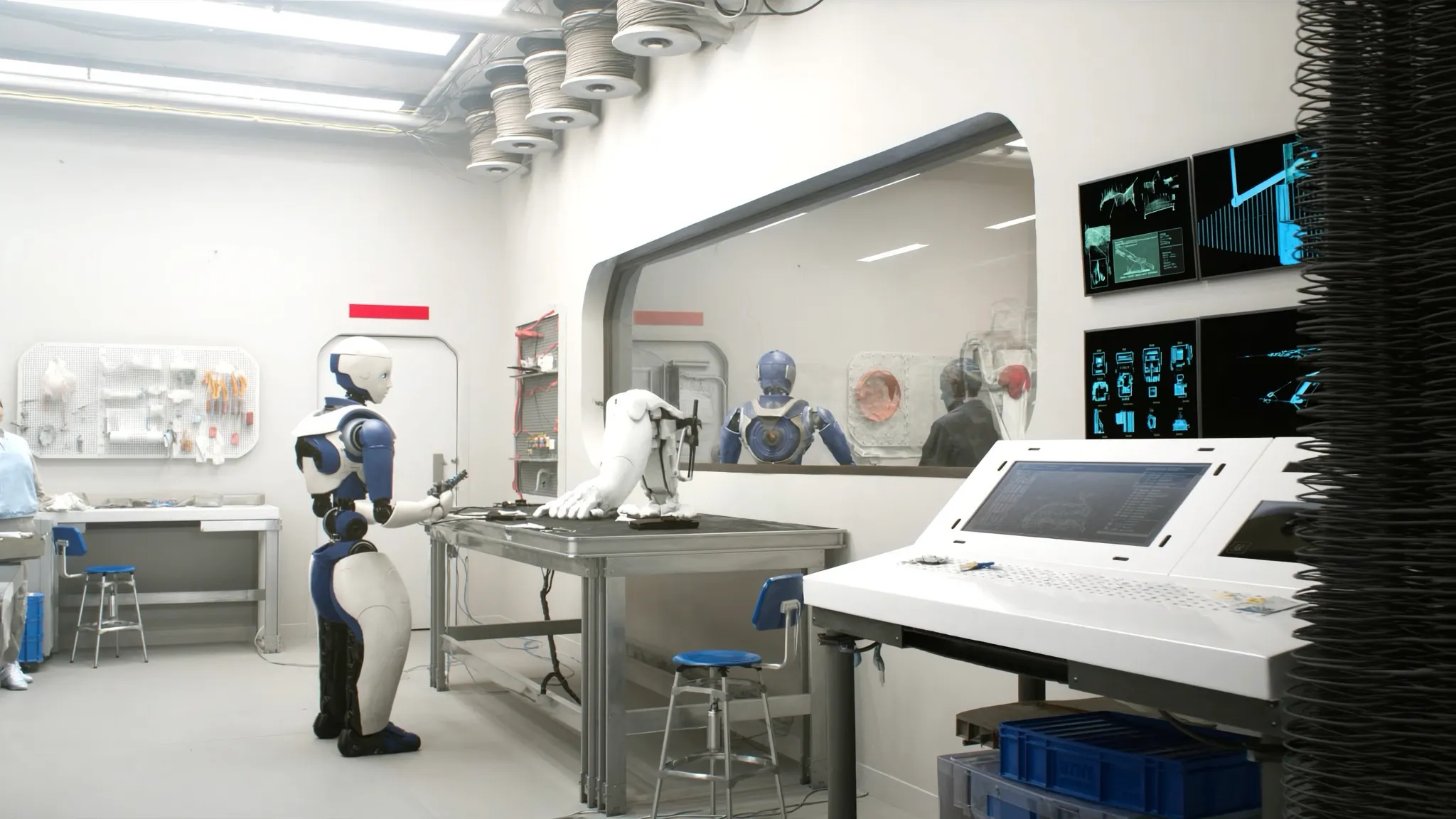
The unique characteristics of cobots underpin this rapid growth. Unlike traditional industrial robots that operate in isolated environments with safety fences, cobots are designed to safely collaborate with human workers in the same space. This technology, first commercialized by Denmark’s Universal Robots in 2008, has now become the most sought-after automation solution among global manufacturers. Kim Povlsen, CEO of Universal Robots, stated in a recent interview, “In the first half of 2025 alone, we recorded a 35% increase in orders compared to the same period last year, with particularly notable growth in the Asian market.” Indeed, the Asian markets of Korea, China, and Japan account for over 60% of total cobot demand.
Technological advancements in cobots are also a key driver of market growth. The latest cobots are equipped with advanced sensor technology and AI-based learning algorithms, enabling safe and precise operations even in complex work environments. Germany’s KUKA released the LBR iisy series in 2025, integrating torque sensors and vision systems to perform assembly tasks with a precision of 0.1mm. Additionally, it reduced collision detection time from the previous 100ms to 50ms, significantly enhancing collaboration safety with humans. Switzerland’s ABB announced that its GoFa 5 cobot, launched in the second half of 2025, handles payloads of up to 5kg while fully complying with ISO 10218 and ISO/TS 15066 safety standards.
Expansion to SMEs and Market Democratization
One of the most significant changes in the cobot market is the proactive adoption by small and medium-sized manufacturers. Traditionally, industrial robots were adopted primarily by large corporations due to high initial investment costs and complex programming, but cobots are spreading the benefits of automation to SMEs with their relatively low prices and intuitive usability. According to a survey by the Korea Robotics Industry Association, 72% of domestic companies adopting cobots in 2025 were SMEs with fewer than 300 employees, a significant increase from 43% in 2020.
In terms of price competitiveness, cobots show considerable advantages over traditional industrial robots. Universal Robots’ UR3e model is sold for approximately $35,000, about half the cost of setting up a traditional industrial robot system with similar performance. More importantly, the return on investment (ROI) for cobots has been reduced to an average of 8-12 months. Techwin, a small automotive parts manufacturer in Ansan, Gyeonggi Province, reported a 45% increase in productivity and a reduction in defect rates from 2.3% to 0.8% after introducing two cobots from Hyundai Robotics in early 2025. Kim Seong-ho, the production management team leader, explained, “With cobots handling precision assembly tasks that previously required skilled workers, we can now allocate our workforce to more value-added tasks.”
Simplification of programming and setup also plays a crucial role in the spread among SMEs. Hyundai Robotics’ ‘Hi6’ cobot offers a drag-and-drop graphical interface, allowing operators to set up the robot without separate programming training. In practice, the average setup time for Hi6 is under 30 minutes, a revolutionary reduction compared to the 2-3 days required for traditional industrial robots. Japan’s FANUC released the CRX-5iA model in 2025, featuring a ‘Hand Guidance’ function that enables operators to directly move the robot arm to teach movements intuitively.
The notable progress of Korean companies in the global cobot market is also worth mentioning. As of the third quarter of 2025, Hyundai Robotics held a 23% share of the domestic cobot market, ranking second, while Techcross ranked fourth with a 15% share. Hyundai Robotics’ revenue is projected to increase by 67% year-on-year to 124 billion won in 2025. Leveraging quality control and a global service network based on Hyundai Motor Group’s manufacturing expertise, Hyundai Robotics is accelerating its expansion into the North American and European markets. Techcross is also rapidly growing in the Southeast Asian market by securing price competitiveness through its independently developed joint reducer technology.
Expansion Across Industries and Technological Innovation
The application of cobots is expanding beyond traditional automotive and electronics industries to food, medical, logistics, and more. Growth in the food industry is particularly notable, with the shipment of FDA-approved food-grade cobots increasing by 78% year-on-year in 2025. Odense Robotics in Denmark developed a food packaging cobot that fully meets HACCP standards and can package 1,200 products per hour, attracting attention from small food manufacturers. In Korea, CJ CheilJedang announced that by introducing Hyundai Robotics’ cobots to their kimchi packaging line, they significantly improved hygiene levels while enhancing production efficiency by 30%.
The use of cobots in the medical field is also rapidly expanding. Following the COVID-19 pandemic, the demand for non-contact medical services has increased, resulting in a high annual growth rate of 45% in the medical cobot market. The medical cobot jointly developed by Denmark’s Universal Robots and Germany’s Fraunhofer Institute assists medical staff in operating rooms by accurately delivering surgical tools and monitoring patient conditions. In Korea, Seoul National University Hospital began pilot testing cobots for medication distribution and patient care in hospital rooms in the second half of 2025, reducing the workload of medical staff and minimizing infection risks.
The introduction of cobots in the logistics industry is also accelerating. As e-commerce companies like Amazon and Coupang actively invest in warehouse automation, the demand for cobots specialized in picking and packing tasks is surging. Coupang introduced 50 cobots from Techcross at its Gimpo logistics center in 2025, improving the accuracy of small item picking tasks to 99.2%. This system, combined with an AI vision system, can automatically recognize and sort products of various shapes and sizes. Lee Jeong-hoon, Vice President of Coupang’s Logistics Technology Team, explained, “The introduction of cobots increased picking speed from 120 to 180 items per hour, a 50% improvement, while significantly reducing musculoskeletal strain on workers.”
From a technological perspective, the most significant innovation in cobots in 2025 is the integration of AI and machine learning technologies. Universal Robots’ UR20, released in 2025, is equipped with a deep learning-based adaptive control system that can respond in real-time to changes in the work environment. This robot learns from unexpected situations during operations to perform more accurately and efficiently in subsequent tasks. FANUC’s latest CRX series features a ‘Zero Teaching’ function that analyzes existing work data to automatically learn new tasks, reducing setup time by 90%. ABB’s next-generation YuMi model, as a dual-arm cobot, can perform intricate assembly tasks mimicking human hand movements, and is used for assembling precision devices like watches and smartphones with a precision of 0.02mm.
Advancements in sensor technology also significantly contribute to the performance enhancement of cobots. The latest cobots feature multi-sensing systems that integrate torque sensors, vision sensors, and proximity sensors to perceive their surroundings in 360 degrees, ensuring safe collaboration. Hyundai Robotics’ Hi6 A series is equipped with LiDAR sensors to track human movements in the workspace in real-time, stopping operations within 0.05 seconds if a collision risk is detected. With these enhanced safety features, the industrial adoption of cobots is accelerating, and products meeting the international safety standard ISO/TS 15066 are continuously being released.
Along with the growth of the cobot market, the related ecosystem is rapidly expanding. The market size of peripheral industries, including end effectors, vision systems, and software platforms, reached $1.5 billion in 2025, a 42% increase from the previous year. Particularly, the gripper market is growing at an annual rate of 38% due to advancements in adaptive gripper technology that can safely grasp various shapes of objects. Germany’s Schunk and Denmark’s OnRobot are leading this field, while Korea’s Neuromeka and Doog Robotics are launching competitive products.
However, the rapid growth of the cobot market also presents challenges that need to be addressed. The most significant issue is the shortage of skilled robot engineers. According to the Korea Robotics Industry Association, the current domestic demand for cobot-related professionals is 3,200, but the supply is only 1,800, resulting in a 44% manpower shortage. Consequently, companies adopting cobots face difficulties in effective operation and maintenance. To address this issue, the government and industry are expanding cobot expert training programs, and major companies like Hyundai Robotics and Techcross are strengthening educational programs for their clients. Additionally, cybersecurity is emerging as a critical issue. As the number of network-connected cobots increases, the risk of hacking or malware attacks grows, prompting robot manufacturers to invest significantly in enhancing security features.
In the second half of 2025, the most notable trend in the cobot market is the spread of the ‘Robot-as-a-Service (RaaS)’ business model. To meet the demands of SMEs looking to reduce initial investment burdens, services that lease cobots for a monthly subscription fee are gaining popularity. Universal Robots offers cobots through its ‘UR+ Service’ starting at $1,500 per month, which includes installation, training, and maintenance. In Korea, Hyundai Robotics launched the ‘Smart Factory Subscription Service,’ providing cobots and peripheral systems as a package starting at 2 million won per month. This RaaS model accounts for 18% of the total cobot market in 2025 and is rapidly growing.
The future outlook for the cobot market is very bright. As global manufacturers face labor shortages and wage increase pressures, automation through cobots is becoming a necessity rather than an option. In particular, in advanced countries with aging populations like Korea, Japan, and Germany, cobots are becoming a key means of maintaining manufacturing competitiveness. From an investment perspective, companies related to cobots have sustained growth momentum, and the global market expansion of domestic companies like Hyundai Robotics and Techcross, which have secured technological competitiveness, is expected to accelerate. However, considering the intense price competition and the pace of technological advancement, continuous R&D investment and the ability to develop customer-tailored solutions will be crucial factors determining the long-term success of companies.
*This content is provided for reference purposes for investment decisions and should be used at the investor’s own discretion and responsibility for final investment decisions.
